Explain This Website
LiveA production SaaS tool that runs 50+ signals across 9 audit sections: SEO, Core Web Vitals, tech stack detection, conversion scoring, content intelligence, page structure, and more. Returns a prioritized fix plan. No headless browser: the entire analysis is a pure Go HTML parser running 19 sub-analyzers in a single DOM pass, with PageSpeed and RDAP fetched concurrently. Ships with three user tiers, JWT auth, PostgreSQL audit history, PDF export, and Tap Payments subscriptions. Live at explain-this-website.vercel.app.
GoReactTypeScriptPostgreSQLViteTailwind CSSResendDocker
Updated 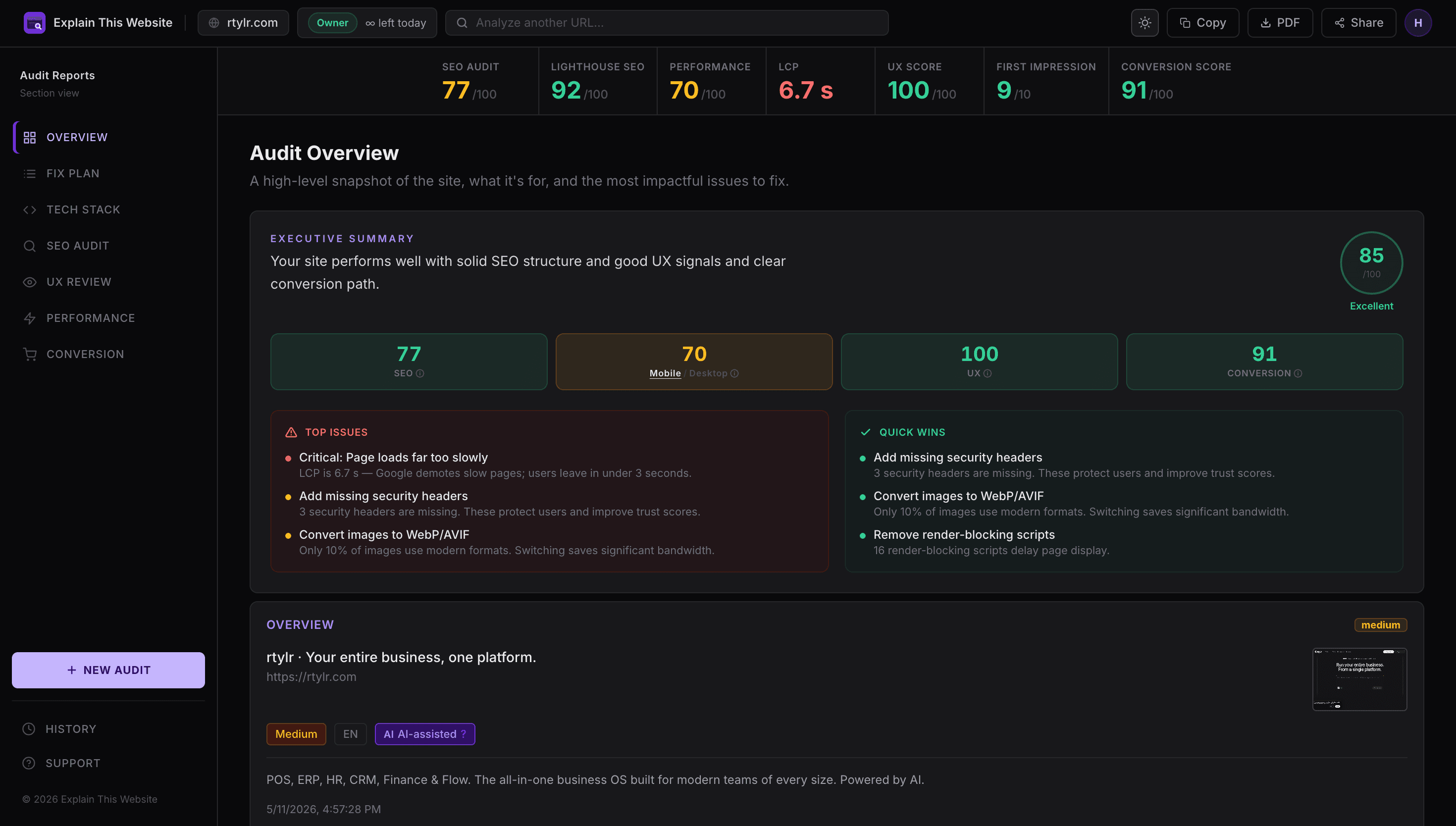
- Problem
- Getting a real website audit means hiring a consultant or stitching together a dozen separate tools. There was no single tool that could instantly give a non-technical founder a clear, prioritized picture of what's holding their site back across SEO, performance, UX, conversion, and content.
- Solution
- Built a Go backend that fetches raw HTML (no headless browser), runs a single-pass DOM walk through 19 independent sub-analyzers, and fires PageSpeed Insights and RDAP lookups in parallel goroutines, so the full report is ready in seconds even if one external API is slow. The React frontend renders results across 27 card components with scoring breakdowns, conversion axis charts, tech fingerprints with confidence levels, and a prioritized action plan. Auth, quota enforcement, audit history, PDF export, and payments are all first-party.
- Challenges
- Fingerprinting 30+ technologies without false positives required confidence-layered detection rules and tagOnly guards that distinguish actual framework usage from marketing copy mentioning a tool's name. Intent inference (classifying a site as SaaS, ecommerce, blog, etc.) needed multi-signal logic rather than keyword matching. Enforcing per-user daily quotas across three tiers fast enough to not add latency meant combining an in-memory store with DB-backed persistence for durability.
- Outcome
- Live and handling real traffic. 9,165 lines of Go across 35+ files, 8,839 lines of TypeScript/React across 68 files, 18 REST endpoints, 6 DB tables. Dual-layer caching (in-memory GlobalStore + PostgreSQL JSONB) keeps repeat audits instant. Full admin panel with feature flags, per-user controls, usage charts, and broadcast email via Resend.